
Fiete and the Farmer’s Brief Fatherhood
Der goldene HandschuhThis thread traces how a rare experience of care briefly gives Fiete a model of belonging that he carries into a life otherwise shaped by abuse and abandonment.
increasing Bearing strength in each event
 decreasing
Bearing strength in each eventdecreasingEscape from East Germany
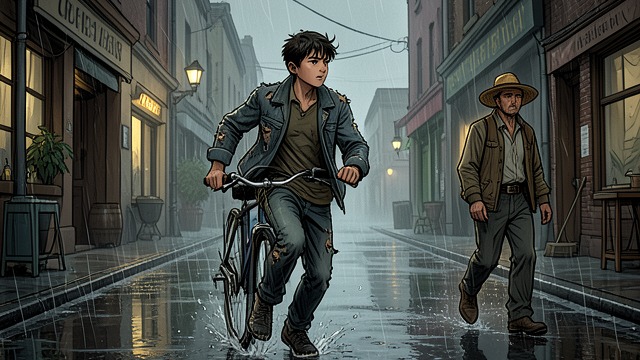
A Boy Without a Home
Flight and vulnerability
At sixteen, Fiete Honka flees East Germany and arrives in the West with little protection against the adults who can offer him work or shelter. His escape opens the possibility of a new life, but it also leaves him dependent on strangers and unable to choose freely among the conditions they impose.
He initially finds casual agricultural work, only to discover that the farmer who employs him is violent. The promise of refuge proves fragile: labor and shelter become instruments of control, and the boy’s hope of starting over is repeatedly punished.
The need for care
This early vulnerability gives the later bond with a kinder farmer its particular force. Fiete does not simply need a place to sleep; he longs for someone to recognize him as a person worthy of patience and affection.
That longing will make a short period of tenderness seem almost impossibly complete. It also helps explain why Fiete returns to the memory of being cared for long after the relationship itself has ended.
Violence at Frerk’s Farm
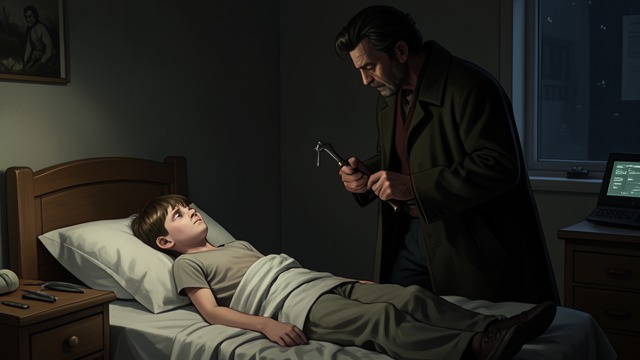
Returned to His Tormentor
A failed attempt to flee
After enduring repeated beatings at the farm, Fiete escapes on an old bicycle. A police patrol finds him and returns him to the farmer, undoing the one act of self-rescue he has managed to make.
The return deepens his sense that authority will not protect him. Instead of separating a vulnerable boy from an abusive adult, the officers restore the arrangement that has made Fiete afraid for his life.
Hope under coercion
The farmer confines Fiete in a damp, cramped space, binds him in bed, and punishes him for wetting himself. Hunger, cold, and humiliation become part of daily existence, leaving little room for trust or ordinary affection.
Fiete’s bond with the farmer is therefore not a mutual attachment but a relationship imposed by dependence and terror. Its cruelty makes the later memory of genuine kindness feel like an exception to an otherwise unbroken pattern.
A Second Flight
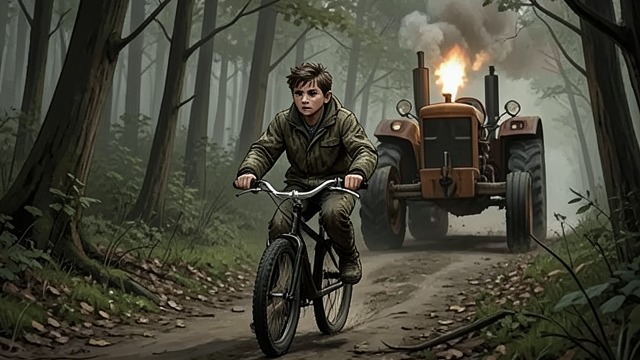
Flight and Injury
A desperate escape
Fiete eventually frees himself and escapes again, this time on the bicycle while the farmer is still asleep. He pedals toward a narrow forest path that the farmer’s tractor cannot follow, measuring safety in the shrinking distance between himself and the trees.
The farmer catches up before Fiete reaches shelter and strikes the bicycle with the tractor. Fiete is thrown into a fence post and left badly injured in the mud, while the farmer returns to the farm without calling for medical help.
The damage of abandonment
Fiete is found about twenty-five hours later, more dead than alive. He spends three months in hospital, but his nose and upper teeth are never properly restored.
The episode makes survival feel less like rescue than luck. Its lasting physical and emotional injuries follow Fiete into adulthood, while the memory of those who failed him magnifies the importance of the one person who once offered care without cruelty.
Two Years of Belonging
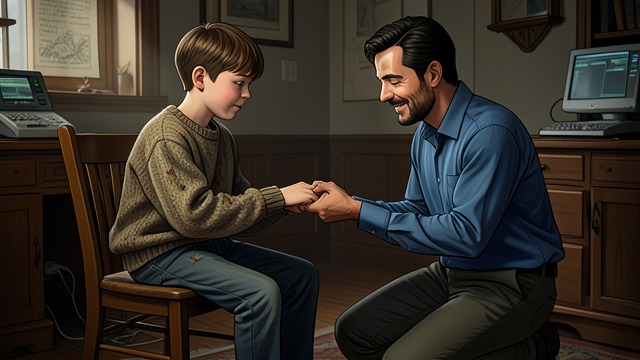
A Rare Experience of Love
An adopted son
After fleeing East Germany, Fiete is taken in by Bauer Geerdes, who accepts him as a son. For two years, the boy experiences a home in which an adult is interested in him, tries to understand him, and meets him with patience and affection.
Fiete remembers this interval as a kind of paradise. The contrast with the violence he had known makes the ordinary gestures of care feel extraordinary: he is not merely housed or put to work but treated as someone whose feelings matter.
A memory that survives
Long afterward, Fiete imagines using a time machine to return to that home and make the happy period begin again whenever it ends. The fantasy expresses how completely he depends on this memory as proof that tenderness once existed in his life.
The bond cannot erase the years of deprivation before or after it. Its importance lies in its brief alternative: for once, Fiete is met with love rather than force, and that experience remains one of the few memories he can call happiness.
1951, when Fiete is sixteen
After Fiete’s first escape from the farm
After Fiete’s first return to the farm
1952, during Fiete’s stay at the farm in Brockhöfe
